
Beyond Income Over Feed Cost: How Nutrition Unlocks Reproduction ROI
Would you buy the best seed corn and then skip the fertilizer? I think not. Yet, that’s pretty close to what we’re doing with reproduction today. We spend big on top genetics, sexed semen, genomic testing and embryo programs, but too often ration decisions come down to income over feed cost (IOFC) or cost per ton.
Here’s the catch. IOFC only tells us the economics of what is going into the tank, not what is going into the cow for good health and reproduction, and impacting the farm’s true profitability. It measures how well we are converting feed dollars into milk dollars. IOFC values today’s milk but ignores tomorrow’s pregnancies. And in today’s environment – where milk prices are softening, calf values are climbing – that blind spot can get expensive in a hurry.
Why IOFC misses the boat
IOFC has been a trusted scorecard for years because it is a very tangible and immediate measurement, but it leaves out some of the most important pieces of the puzzle. It doesn’t account for the cost of days open, the impact of lost pregnancies or the extra dollars tied to beef-cross calves.
And here’s the thing: A ration can look great on IOFC and still quietly chip away at reproduction and health. Maybe cows lose too much body condition in the fresh period. Maybe the fatty acid profile leans too hard on milkfat yield at the expense of oocyte quality and embryo survival. Either way, those hidden costs don’t show up until months later when conception rates slide or pregnancy losses climb.
That’s why it is time to look at nutrition through a wider lens. Milk yield today matters, but pregnancies are where profitability really multiplies. The herds that recognize this – and invest in nutrition that drives conception, reduces losses and delivers more high-value calves – are the ones set up for long-term profitability.
Fatty acids: More than just calories
When it comes to nutrition and reproduction, fatty acids are one of the clearest examples of why IOFC falls short. On a feed sheet, they appear as an extra cost. However, in a cow, they act like signals influencing inflammation, follicle growth and even early embryo survival.
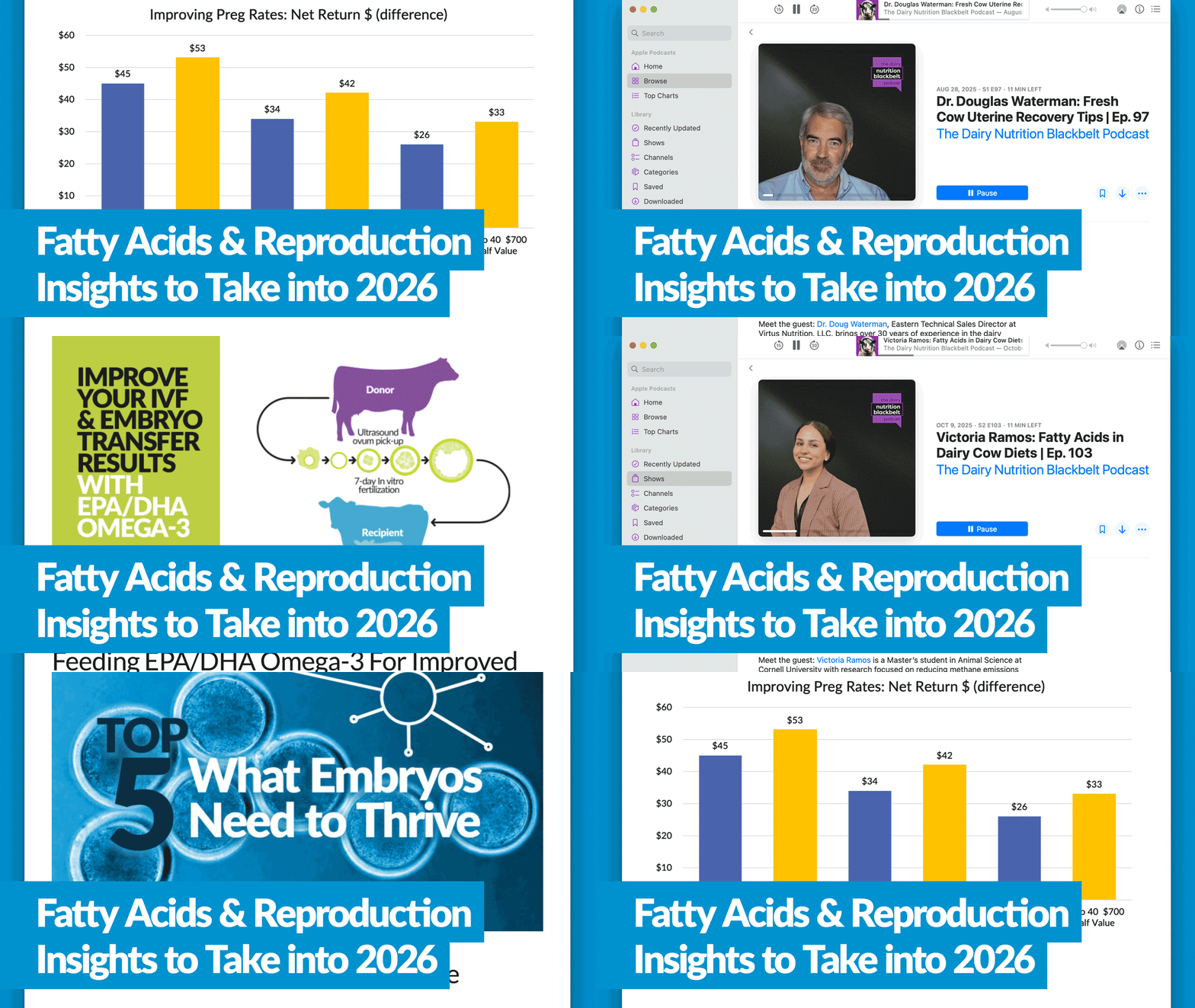
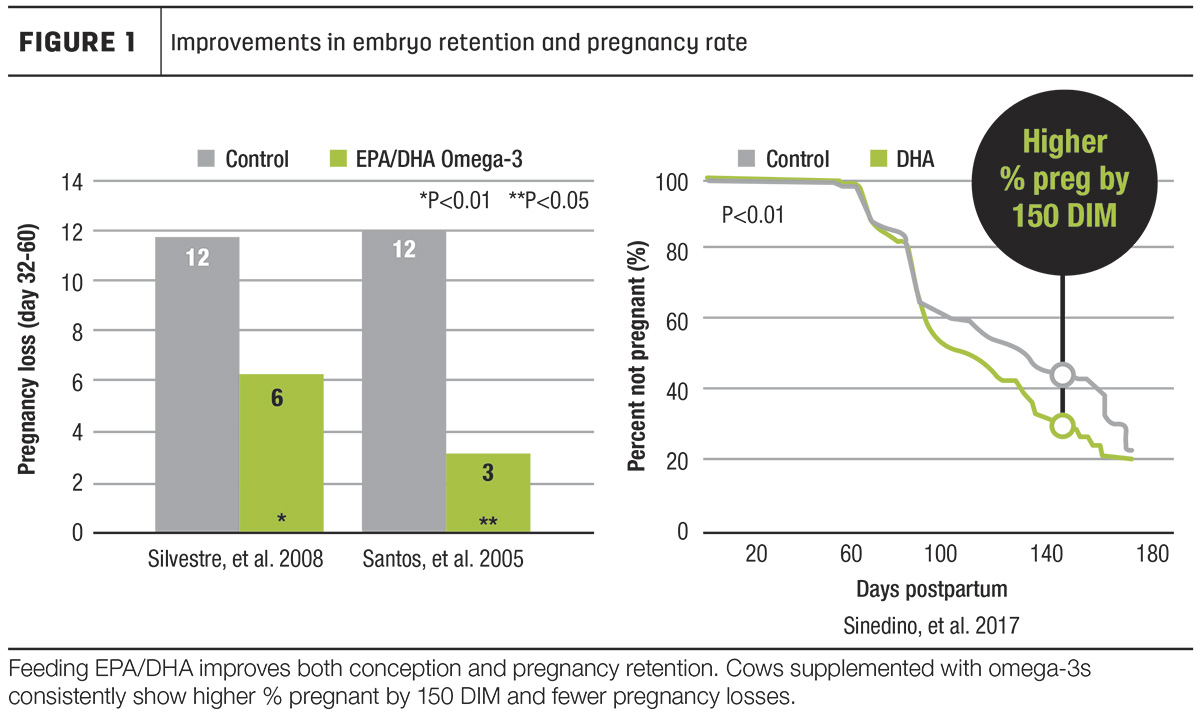
Take omega-3 fatty acids (EPA and DHA), for example. Just a few grams a day from fish oil or algae can reduce uterine inflammation and improve embryo survival. Research has shown consistent results: higher conception rates, fewer early losses and more pregnancies that stick (Figure 1).
And it’s not just omega-3s. Palmitic acid helps drive peak milk and milkfat yield. Oleic acid supports energy balance. But if the ration leans too hard on milkfat yield without balancing for body condition in early lactation, reproduction pays the price. The right mix matters.
Transition: Where it all starts
Reproduction success doesn’t start on breeding day. It starts in the dry pen. How cows eat and maintain condition from the dry period through freshening sets the tone for the whole lactation and their ability to breed back.
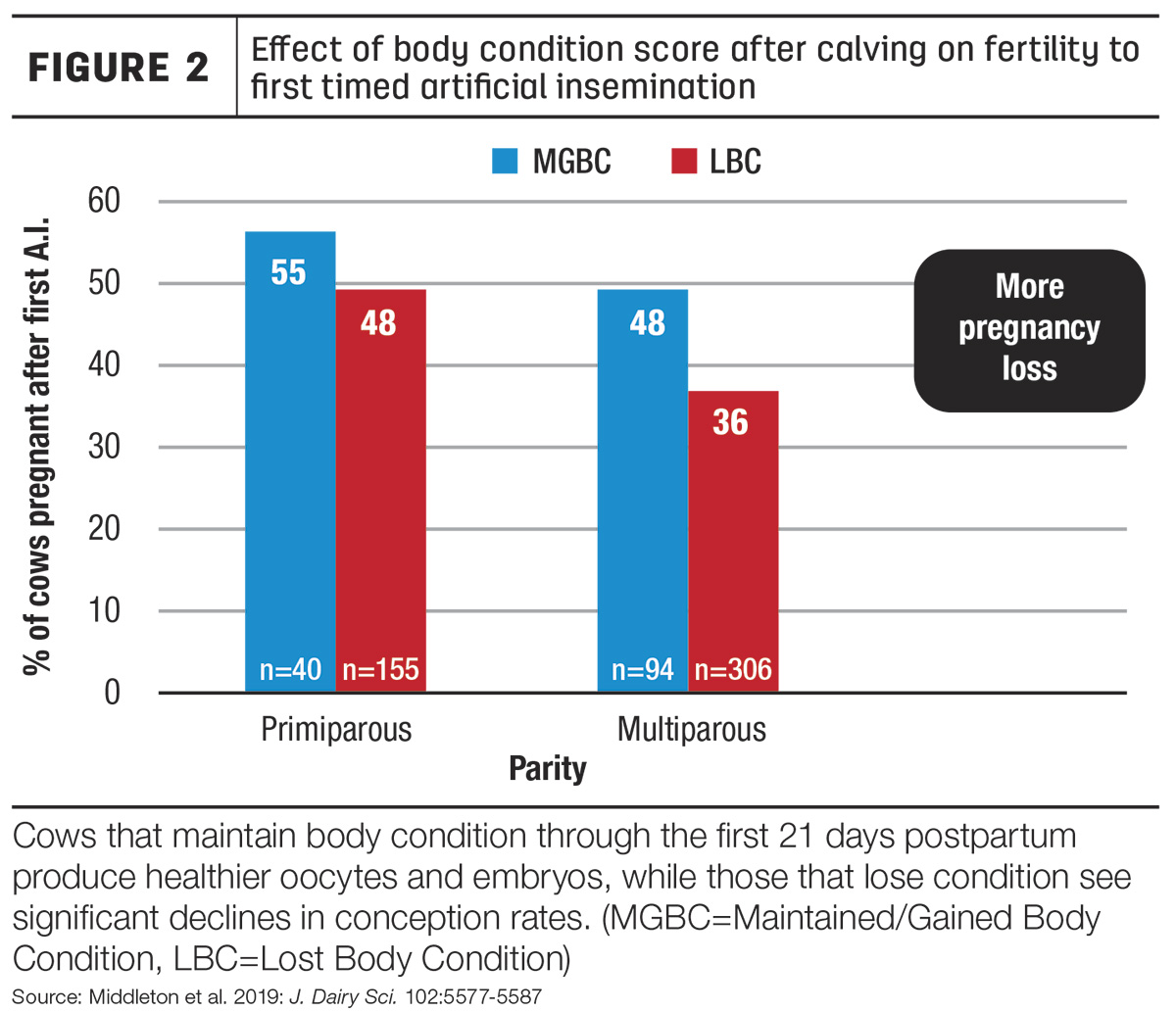
Cows that lose too much body condition in the first 21 days after calving take longer to cycle, have lower-quality eggs and have poorer conception rates. Cows that keep intakes up, maintain condition and avoid deep negative energy balance bounce back faster and give embryos a better chance to thrive (Figure 2).
The good news? We’ve made progress here. Phosphorus-binder technology is largely replacing anionic dietary cation-anion difference (DCAD) diets, helping rations stay more palatable while still protecting against hypocalcemia. Better intakes during the dry period and through calving mean smoother transitions and fewer health setbacks.
Fatty acids play a role here, too. Research shows feeding omega-6s and omega-3s in close-up diets helps cows better manage inflammation, start up with fewer health events and ultimately produce higher-quality eggs and embryos. It all comes back to intake, body condition and inflammation. When cows transition well, everything else in reproduction works better.
The ROI of pregnancies today
Let’s talk about the value of reproduction today. For years, reproduction was valued in the long game – more milk over lactations, faster genetic gain, a bigger pool of replacements. All of that still holds true. But today (with beef-on-dairy), pregnancies drive cash flow in real time.
Day-old beef-cross calves can bring well over $1,000, which is more cash flow today. Replacement heifers are worth $3,500 or more. Each extra pregnancy means more calves, more options and more flexibility. Herds with efficient reproduction can lean heavier into the beef-on-dairy revenue stream while still creating the replacements they need.
In fact, this past year, herds with highly efficient reproduction have given themselves the equivalent of a $2 per hundredweight (cwt) or more raise with the cash inflow from beef-cross calves. And as milk price softens, that calf revenue shifts from being a bonus to being the cash flow driver that keeps the dairy profitable.
Conclusion: Beyond IOFC
As I said earlier, no one plants elite seed corn and then skips the fertilizer. Yet, that’s what happens when we invest in top genetics but don’t fuel cows with the nutrition to optimize pregnancies.
Let’s take the halo off IOFC. Yes, it matters, but it has to be scrutinized in tandem with other measures that truly drive profitability. When you add or pull ingredients from a ration, ask yourself: Does it improve IOFC but take away from health or reproduction? Be aware of the trade-offs and choose accordingly.
The takeaway is simple. Milk and component yield today is important, but it’s the pregnancies carried forward that compound profitability. When you feed with reproduction in mind, you’re not just filling the tank today – you’re fueling the future of your herd.