EPA & DHA Omega-3 Fatty Acids Impact on Udder Health
A Review of the Research on Somatic Cell Count and Milk Quality
Executive Summary
EPA and DHA omega-3 fatty acids are well known for their positive effects on reproduction, embryo development, and fertility in dairy cattle. More recently, researchers have begun investigating whether these bioactive fatty acids may also support udder health.
A growing body of evidence suggests that EPA and DHA supplementation can reduce somatic cell count (SCC) and improve inflammatory regulation. Across multiple independent studies, SCC reductions ranging from approximately 30% to more than 60% have been observed following supplementation with EPA- and DHA-rich ingredients.
While evidence directly demonstrating reductions in clinical mastitis remains limited, the consistency of SCC responses across studies, combined with the known biological effects of EPA and DHA on immune function and inflammatory resolution, suggest these fatty acids may play an important role in supporting mammary gland health.
EPA & DHA Research Summary: Udder Health Outcomes
- 4 independent studies
- Dairy cows and dairy goats
- SCC reductions ranging from 30–60%+
- Evidence of reduced mammary pathogen prevalence
- Supported by known inflammation-resolution mechanisms
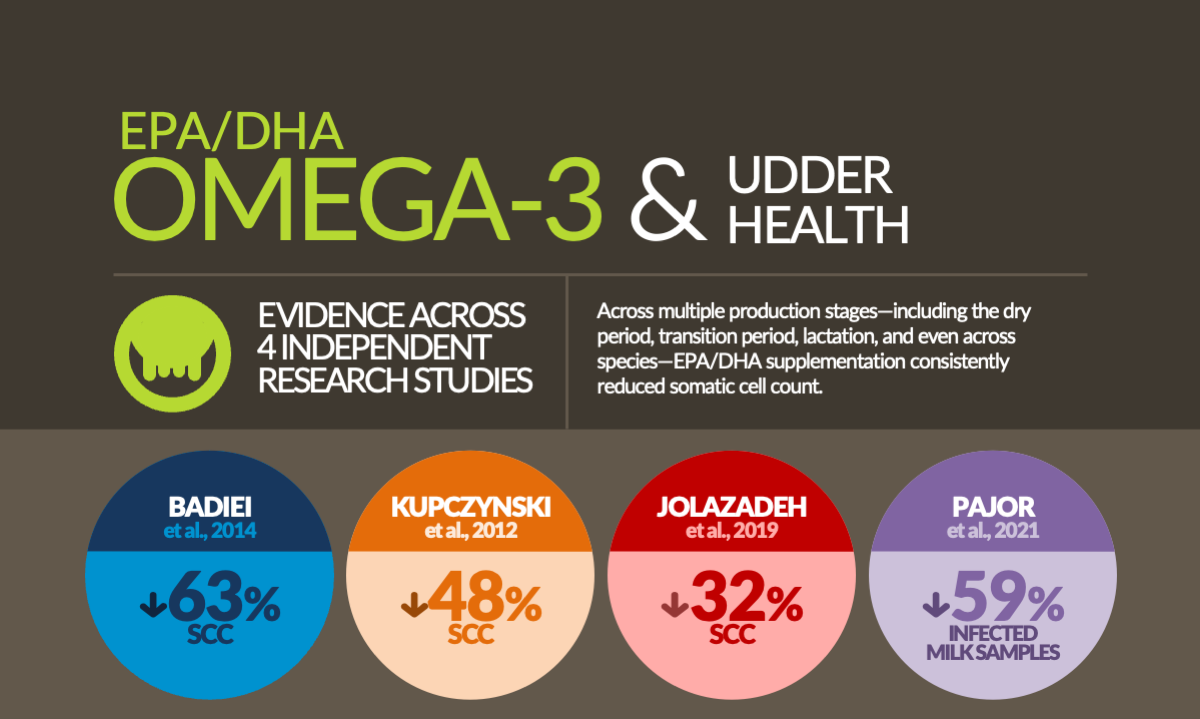
| Study | EPA/DHA Source | SCC Response | Additional Findings |
| Badiei et al., 2014 | Fish Oil | ↓ 37–63% | Strongest SCC response observed |
| Kupczyński et al., 2012 | Protected Fish Oil | ↓ 47% | Lower SCC in lactating cows |
| Jolazadeh et al., 2019 | Fish Oil Calcium Salts | ↓ 30–35% | Numerical reduction in mastitis cases |
| Pajor et al., 2021 | Marine Algae (DHA) | ↓ 59% | Infected milk samples reduced from 31% to 10% |
Why SCC Matters
Somatic cell count is one of the most widely used indicators of udder health in dairy herds. Elevated SCC reflects an immune response occurring within the mammary gland and is often associated with intramammary infection, tissue irritation, or unresolved inflammation.
High SCC can contribute to:
- Reduced milk production
- Lower milk quality
- Increased mastitis treatment costs
- Quality premiums lost due to elevated bulk tank SCC
- Greater culling risk
Because SCC is closely linked to mammary health, nutritional strategies that consistently reduce SCC are of significant interest to dairy producers and nutritionists.
Why EPA and DHA Matter More Than ALA
Not all omega-3 fatty acids are equally biologically active. Alpha-linolenic acid (ALA), the primary omega-3 found in flaxseed and many forages, must first be converted into EPA and DHA before many of its biological benefits can occur. Research in both humans and dairy cattle suggests this conversion process is relatively inefficient. As a result, direct supplementation with EPA and DHA may provide benefits that cannot be reliably achieved through ALA supplementation alone.
EPA and DHA serve as precursors for specialized bioactive compounds known as:
- Resolvins
- Protectins
- Maresins
These compounds actively participate in the resolution phase of inflammation and are believed to be responsible for many of the health benefits associated with marine-derived omega-3 fatty acids.
How EPA and DHA Support Udder Health
Inflammation is an essential component of immune defense. However, successful health outcomes depend not only on initiating inflammation, but also on resolving it efficiently. Traditional inflammatory pathways are driven primarily by omega-6 fatty acids such as arachidonic acid. These pathways generate prostaglandins and leukotrienes that amplify inflammatory responses.
EPA and DHA provide an alternative pathway. After incorporation into immune cell membranes, EPA and DHA are converted into specialized pro-resolving mediators that help:
- Limit excessive inflammatory responses
- Promote tissue recovery
- Support return to normal tissue function
- Improve inflammatory resolution
Rather than suppressing inflammation, EPA and DHA help the body turn inflammation off once its job is complete. This mechanism provides a biologically plausible explanation for the reductions in SCC observed across multiple studies.
Research Evidence
Badiei et al. (2014)
Researchers evaluated fish-oil-derived EPA and DHA supplementation during the dry period.
Average SCC values:
| Treatment | SCC (×1,000 cells/mL) |
| Control | 172 |
| Whole Dry Period EPA/DHA | 63 |
| Far-Off EPA/DHA | 108 |
| Close-Up EPA/DHA | 82 |
Compared with controls, SCC reductions ranged from approximately 37% to 63%. Notably, SCC was one of the strongest responses observed in the study.
Kupczyński et al. (2012)
Lactating dairy cows supplemented with protected fish oil demonstrated substantially lower SCC compared with cows receiving protected palm oil.
| Treatment | SCC (×1,000 cells/mL) |
| Palm Oil Control | 301 |
| Protected Fish Oil | 158 |
This represented approximately a 47% reduction in SCC.
Jolazadeh et al. (2019)
In a transition cow study involving approximately 120 cows, supplementation with calcium salts of fish oil enriched in EPA and DHA during the prepartum period reduced SCC during early lactation.
Compared with control treatments, SCC was reduced by approximately 30–35%. Researchers also observed numerically fewer mastitis cases in supplemented cows, although differences were not statistically significant.
Pajor et al. (2021) – Dairy Goats
Although conducted in dairy goats, this study provides additional evidence supporting a role for DHA in mammary health.
Supplementation with marine algae rich in DHA:
- Reduced SCC by approximately 59%
- Reduced prevalence of infected milk samples from 31% to 10%
- Reduced prevalence of coagulase-negative Staphylococcus infections
These findings suggest that omega-3 supplementation may influence both inflammatory status and pathogen prevalence within the mammary gland.
What About Mastitis?
The evidence supporting reductions in SCC is stronger than the evidence supporting reductions in clinical mastitis. While several studies have reported numerical reductions in mastitis incidence or improvements in mammary health indicators, relatively few studies have been specifically designed to evaluate mastitis as a primary outcome.
Therefore, the current body of evidence supports the conclusion that EPA and DHA can reduce SCC and improve inflammatory regulation, while additional research is needed to determine whether these benefits consistently translate into reductions in clinical mastitis.
Practical Implications for Dairy Producers
The primary reason many dairy producers feed EPA and DHA remains reproduction. Research has consistently demonstrated benefits for:
- Pregnancy establishment
- Embryo survival
- Reproductive efficiency
- Transition cow performance
However, emerging evidence suggests that improved udder health may represent an additional source of value.
Potential benefits include:
- Lower SCC
- Improved milk quality
- Better inflammatory regulation
- Enhanced immune function
- Improved transition cow health
- Potential support for mastitis resistance
Conclusions
A growing body of research supports the role of EPA and DHA omega-3 fatty acids in improving udder health in dairy cattle. Across multiple independent studies, supplementation with EPA- and DHA-rich ingredients has consistently reduced somatic cell count, with reductions ranging from approximately 30% to more than 60%.
Although additional research is needed to determine the direct effects of EPA and DHA on clinical mastitis incidence, the consistency of SCC responses, combined with the well-established role of EPA and DHA in inflammatory resolution, provides a strong scientific foundation for their use as part of a comprehensive dairy cow health program.
As research continues to evolve, EPA and DHA may become recognized not only as reproductive nutrients, but also as valuable tools for supporting immune function, inflammatory balance, and mammary gland health.
Research Article Reference Links:
1. Badiei et al., 2014 Effects of supplementation of fish oil on some reproductive performance, metabolic status, and health of multiparous Holstein cows during the transition period
2. Kupczyński et al., 2012 Effects of protected fish oil on performance and milk fatty acid profile in dairy cows